Karin Altmann and Christiane Seufferlein
Dressing a distaff for flax spinning is the process of arranging prepared flax fibres onto a distaff so they feed smoothly while spinning.
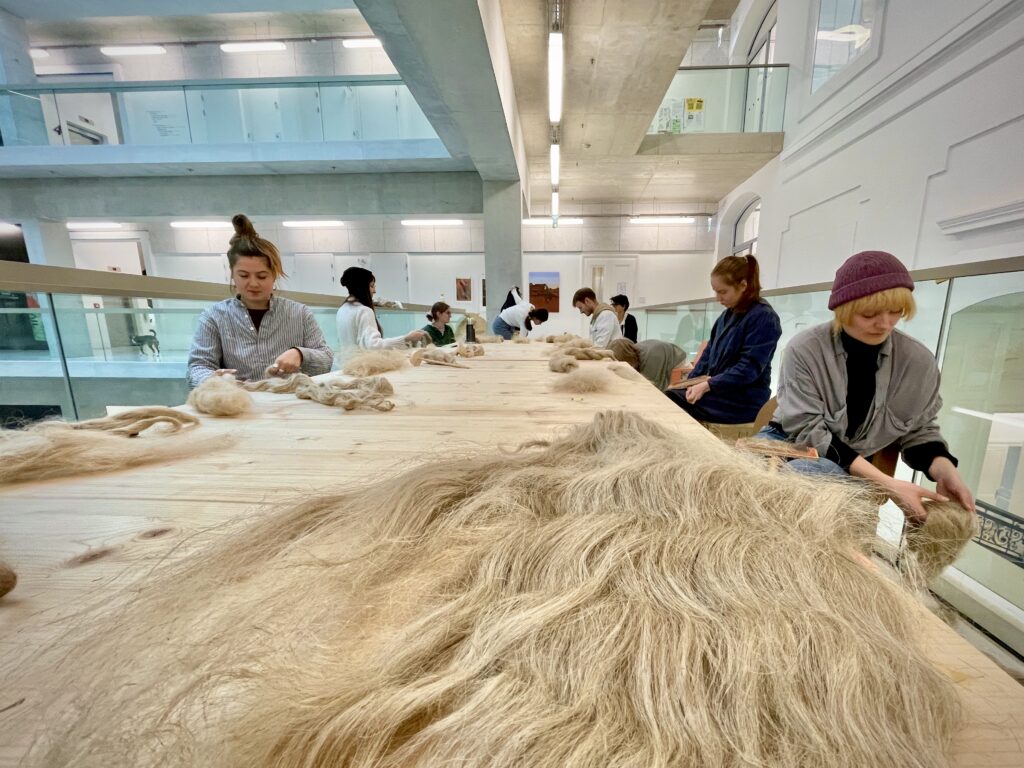
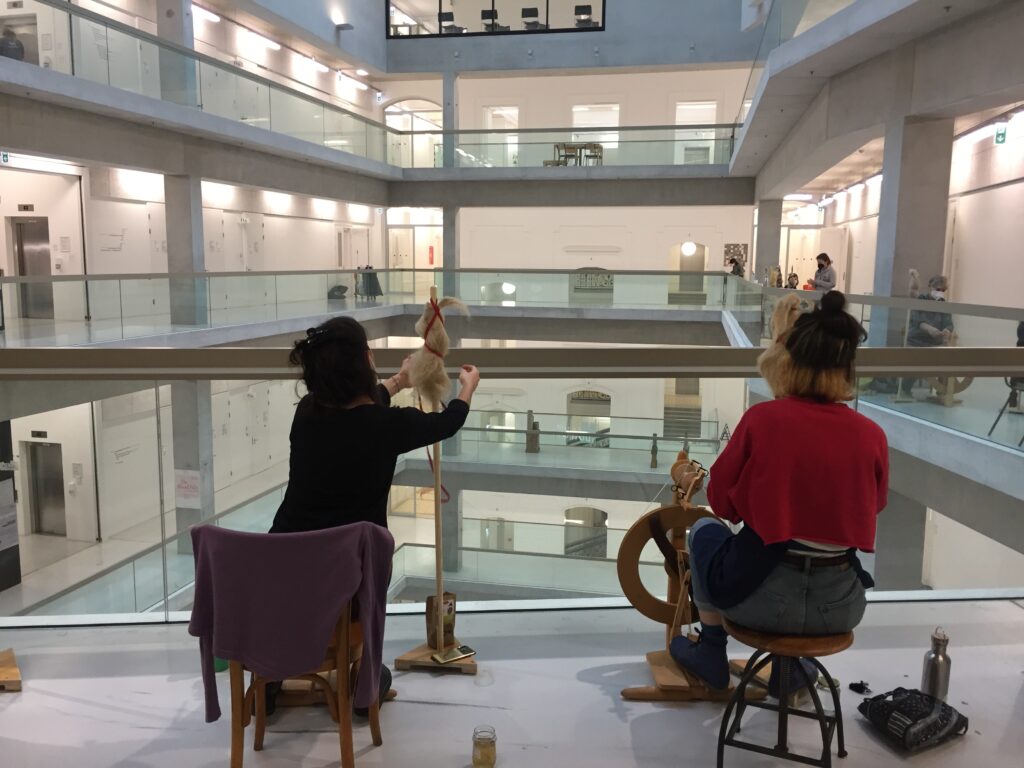
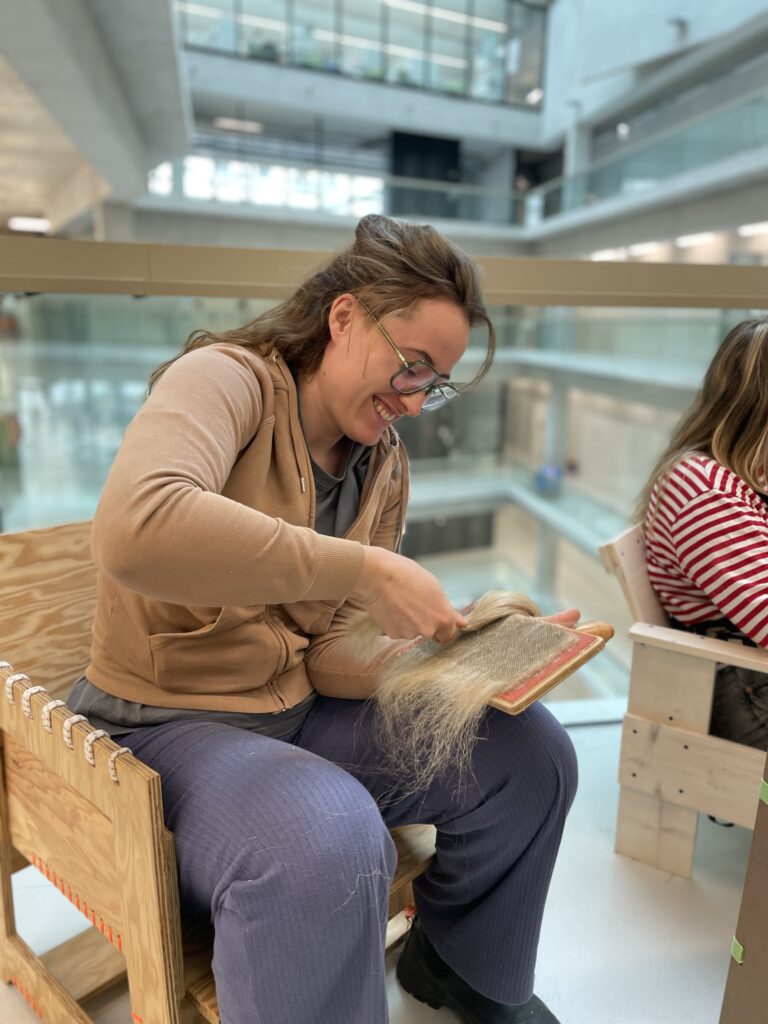
The long fibres left over after hackling and combing with a hand card are difficult to spin by hand. You’d quickly end up with a terrible tangle of fibres in your lap. A distaff takes on the role of a silent servant, holding the fibres ready for us.
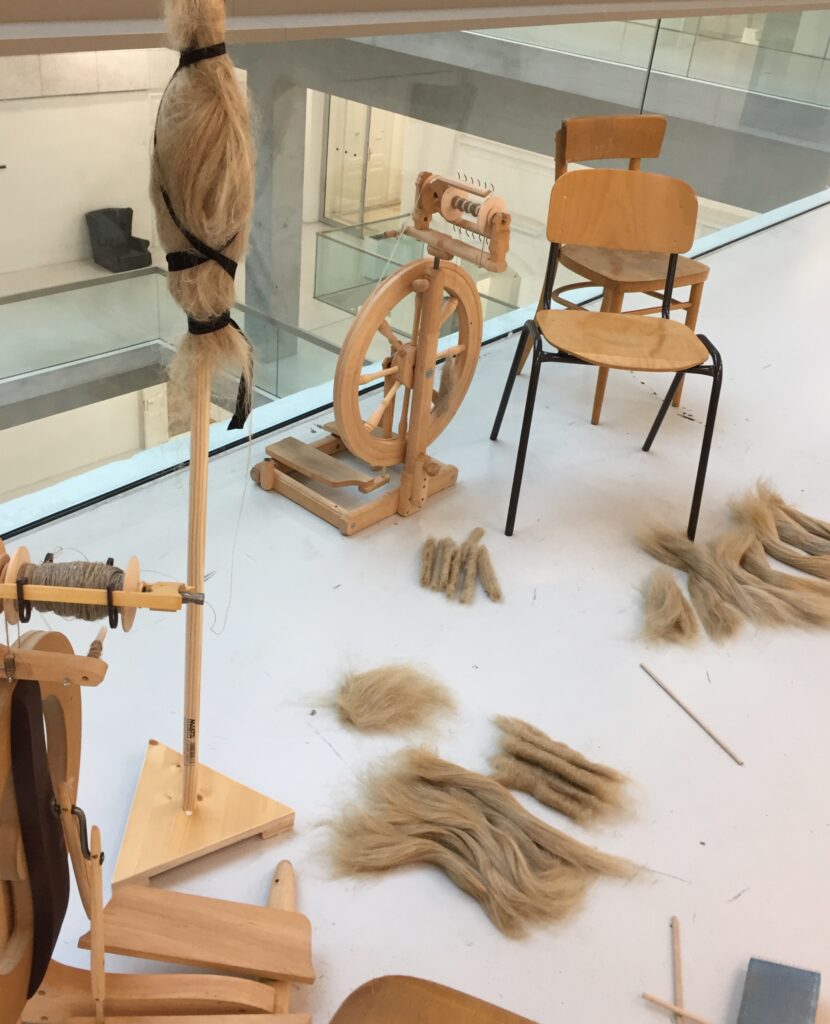
Distaffs are no longer needed in modern spinning and therefore are no longer manufactured. You can use a broom handle, fixed in a wooden base.
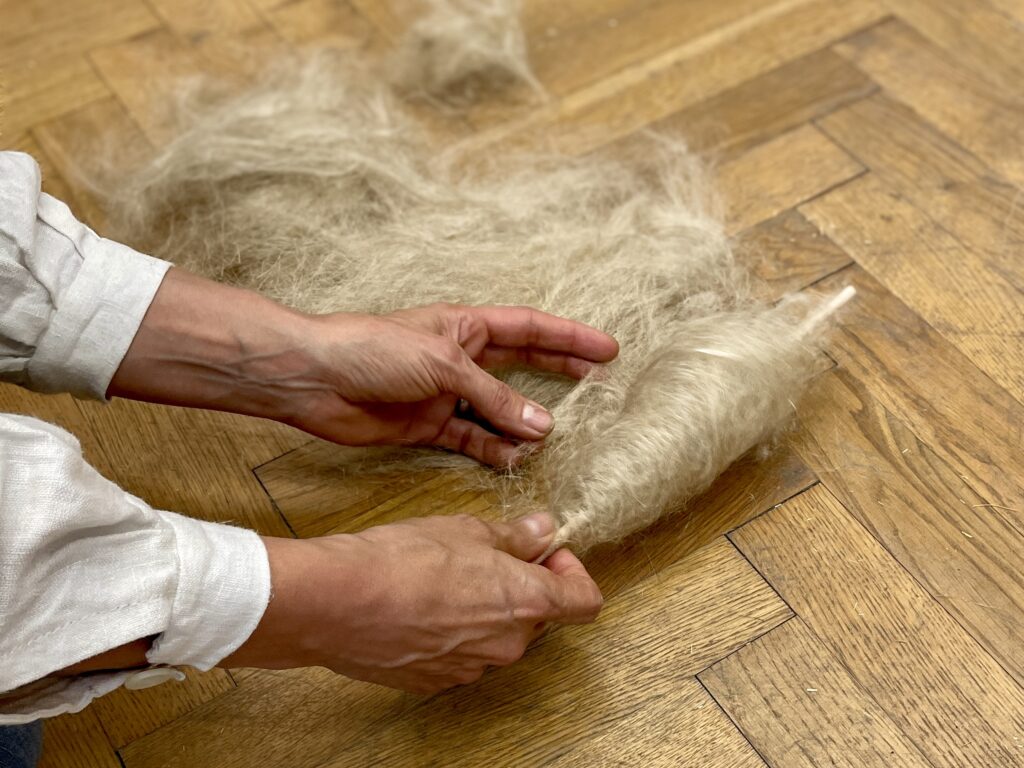
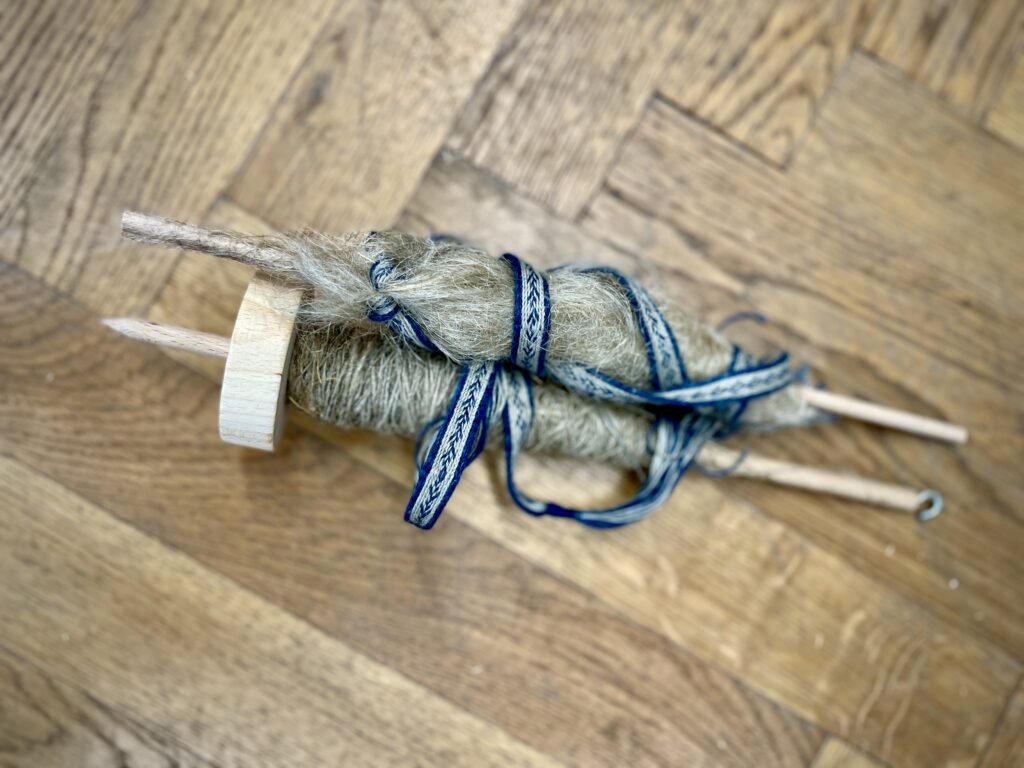
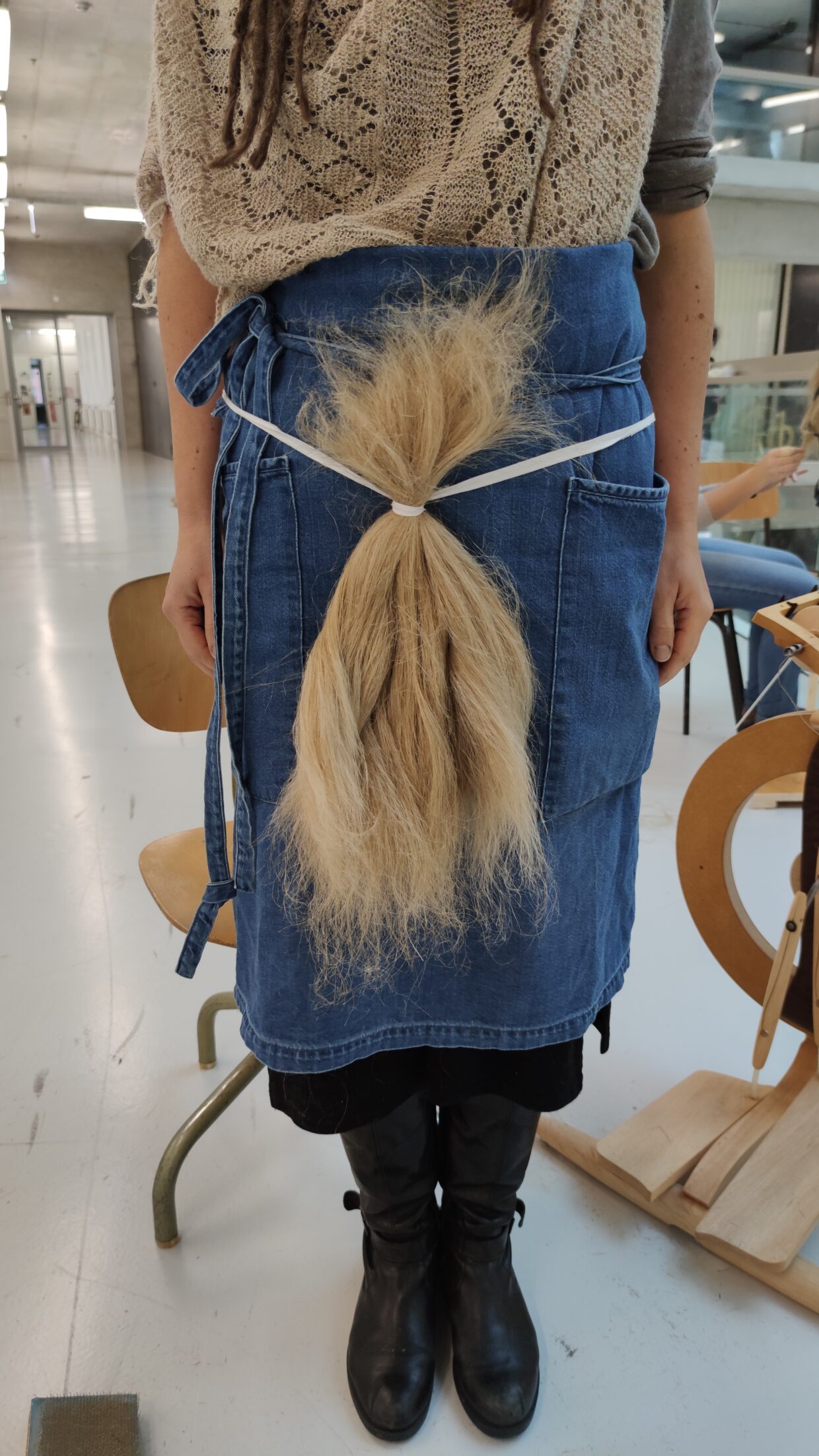
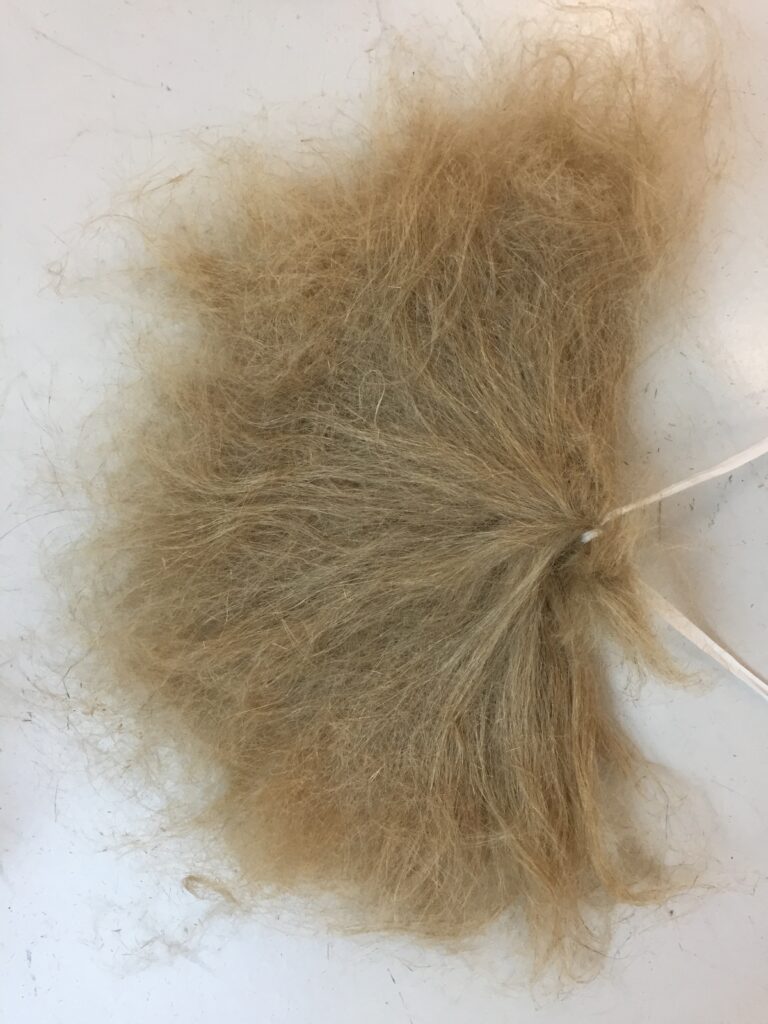
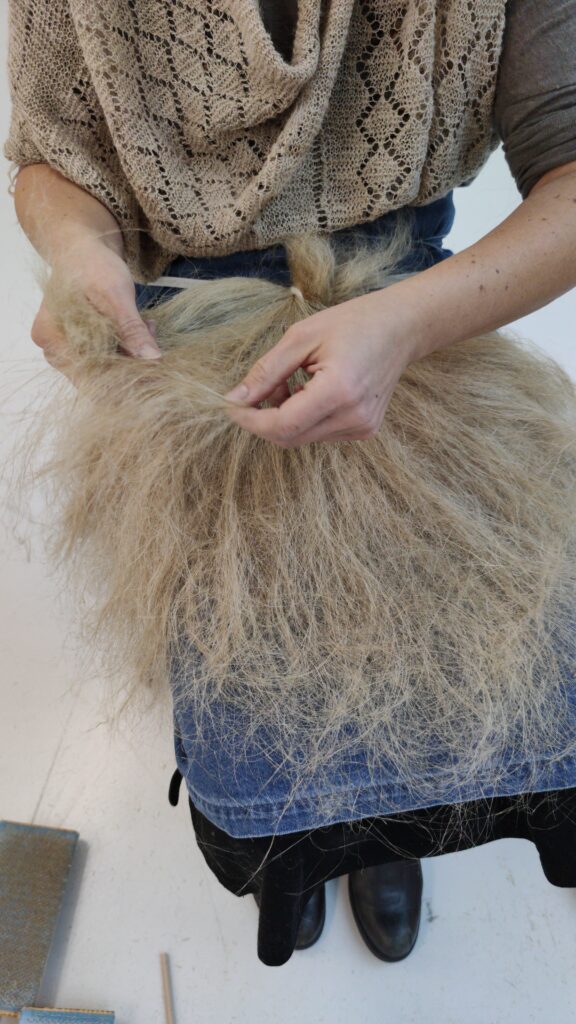
We learned from Christiane that careful fanning really helps with spinning. Christiane selects a handful of fibres and ties them tightly together in the upper quarter with a ribbon or band (at least 2 meters long). Then she ties the bundle around her waist. After that she starts to fan the fibres out as finely as possible on her lap. The flax fibres are carefully criss-crossed in thin layers several times to make sure they are well separated and always have other fibres to catch on to, creating a continuous supply as you draw the yarn. The more time you take here, the better you’ll be able to spin later. Once the fan is finished on your lap, you can transfer it to the distaff using the band that holds it together at the top. If your broom handle has a hole, you can put the band through the hole. Then, loosely wrap the fan around the handle and secure it with the band. Wrap it firmly but not too tightly, you want to hold the fibres in place without compressing them.
During the spinning process, you’ll need to adjust the tightness of the distaff band from time to time. Therefore, it doesn’t really matter, if you tie it too tightly or too loosely at the beginning. Before spinning, you can lightly moisten your fingers or the flax to reduce static and help control fine fibres. When you draw fibres from the distaff, pull gently from the outer layer, allowing them to draft smoothly into the yarn.
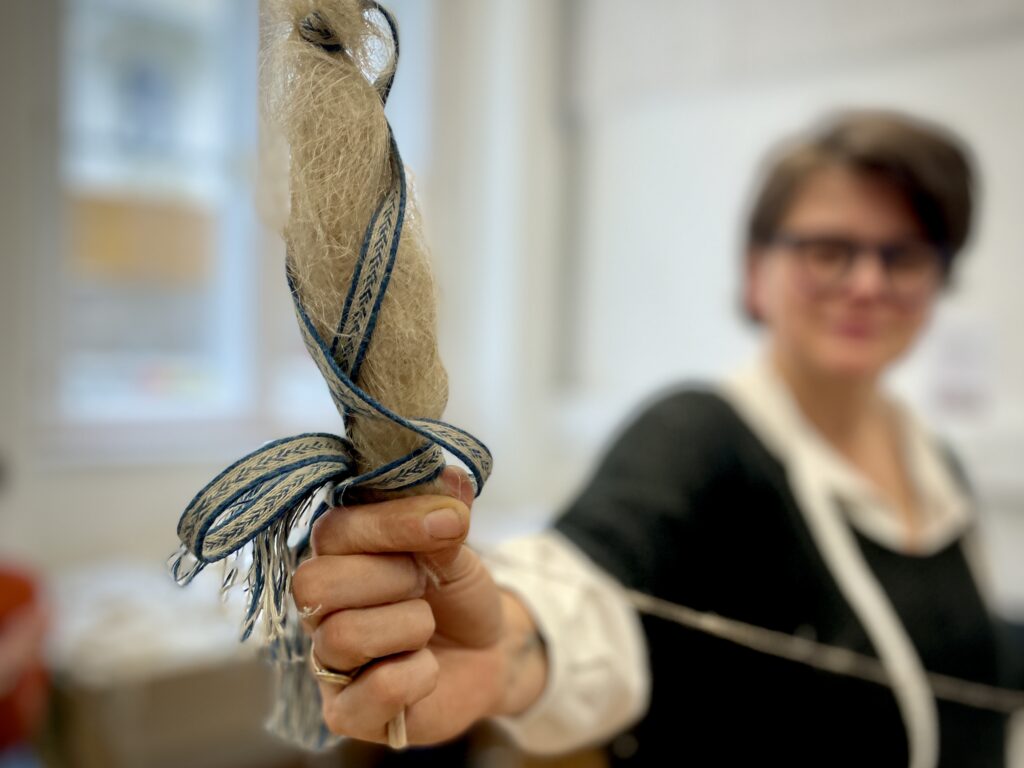
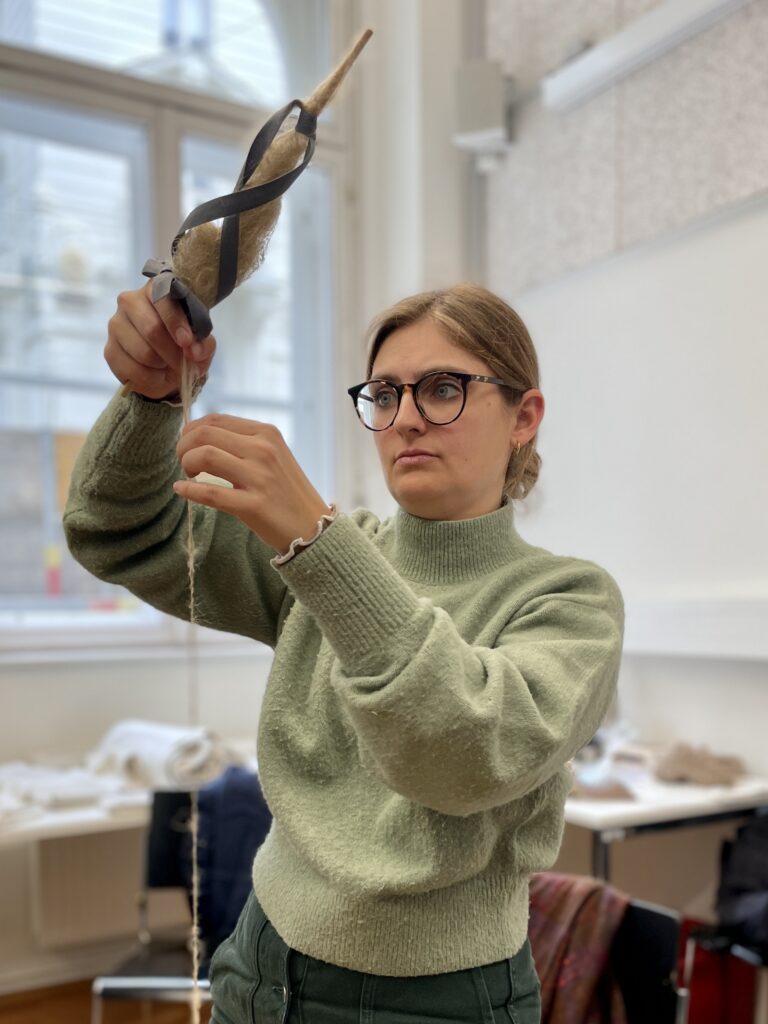
Christiane’s method is based on the way distaffs were traditionally spun in the Mühlviertel region of Austria. In many other countries, distaffs look quite different and are constructed (tied) differently; like this small type of Distaff that can be held in the hand.