Karin Altmann and Nana Opoku

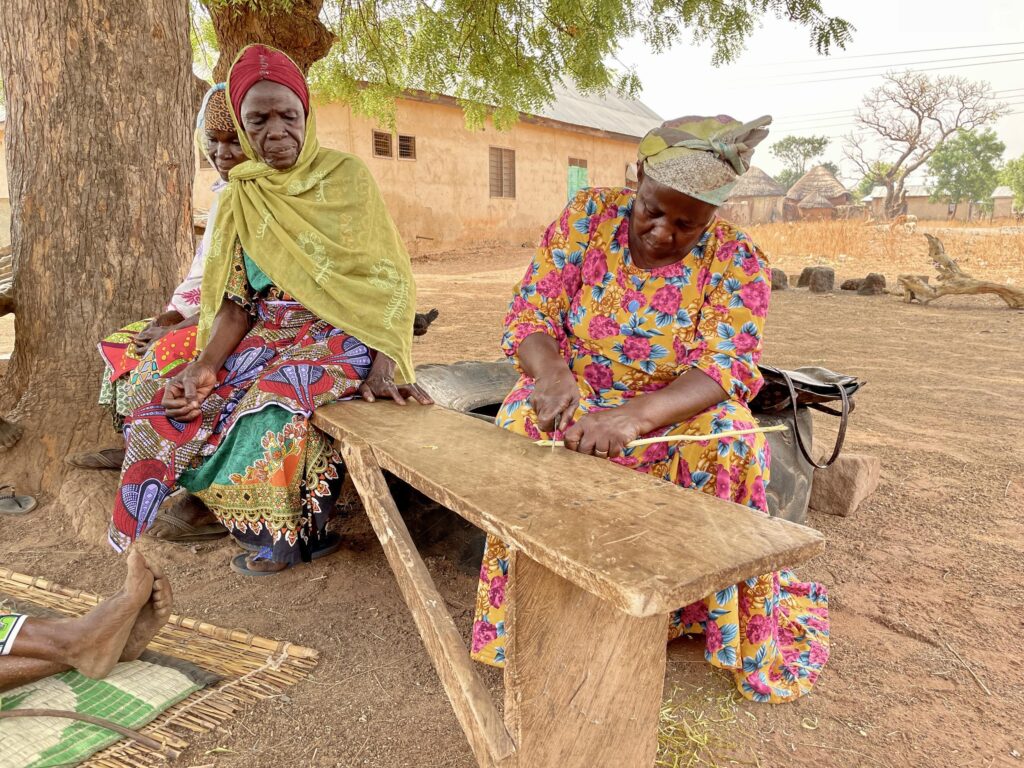
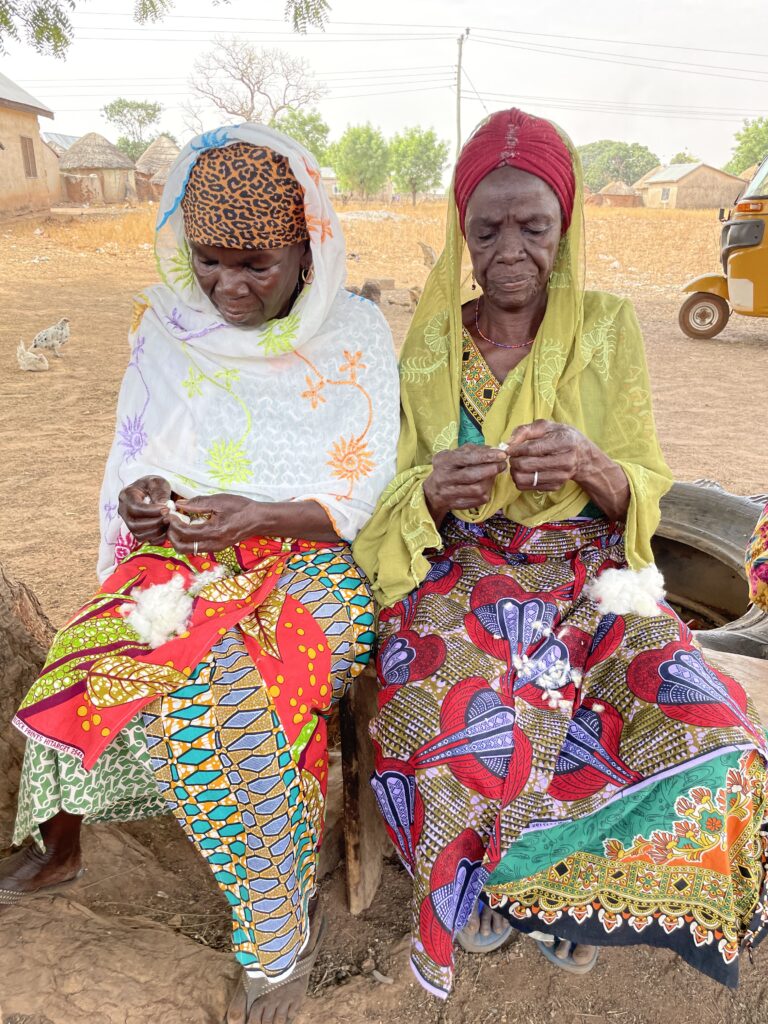
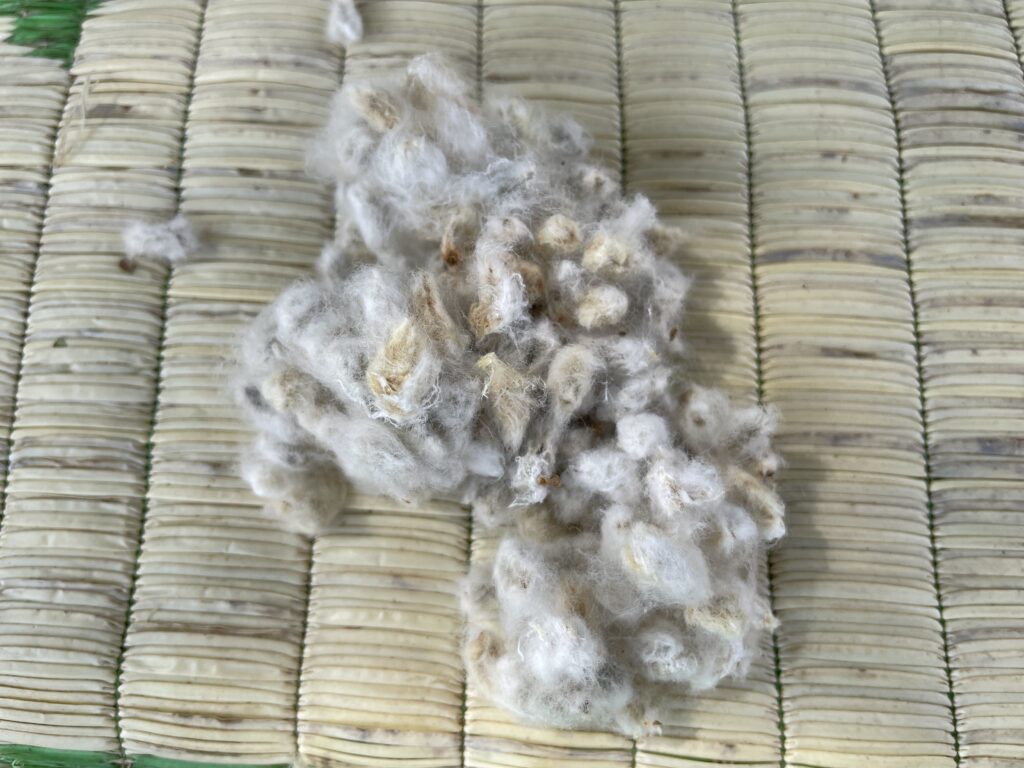
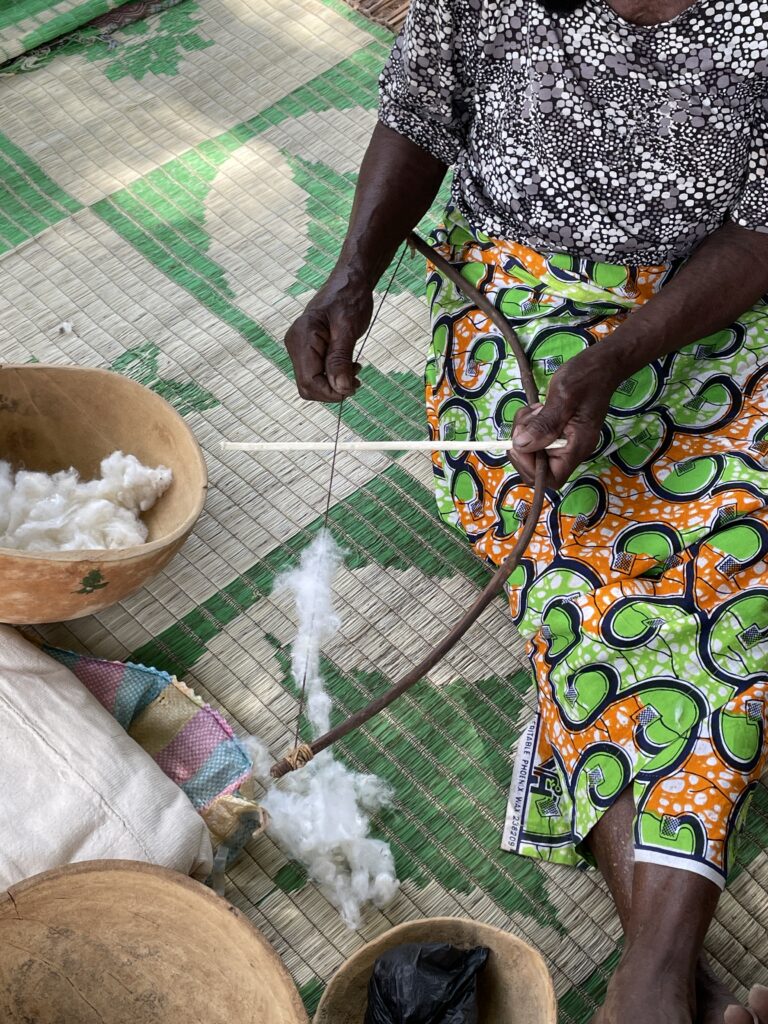
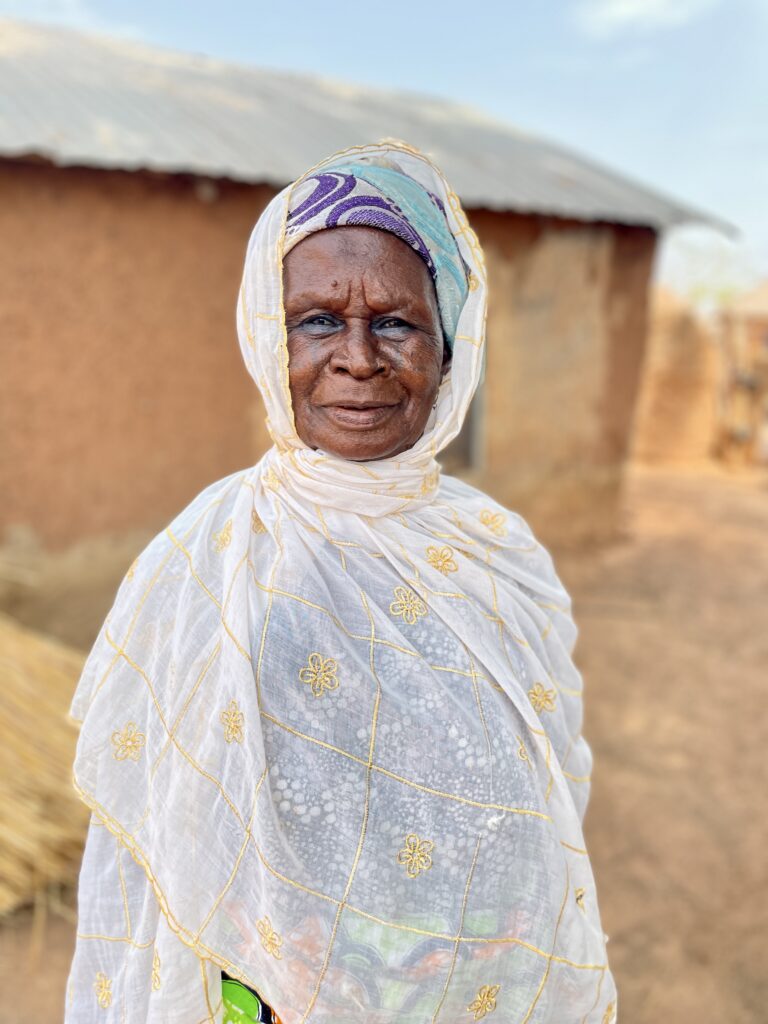
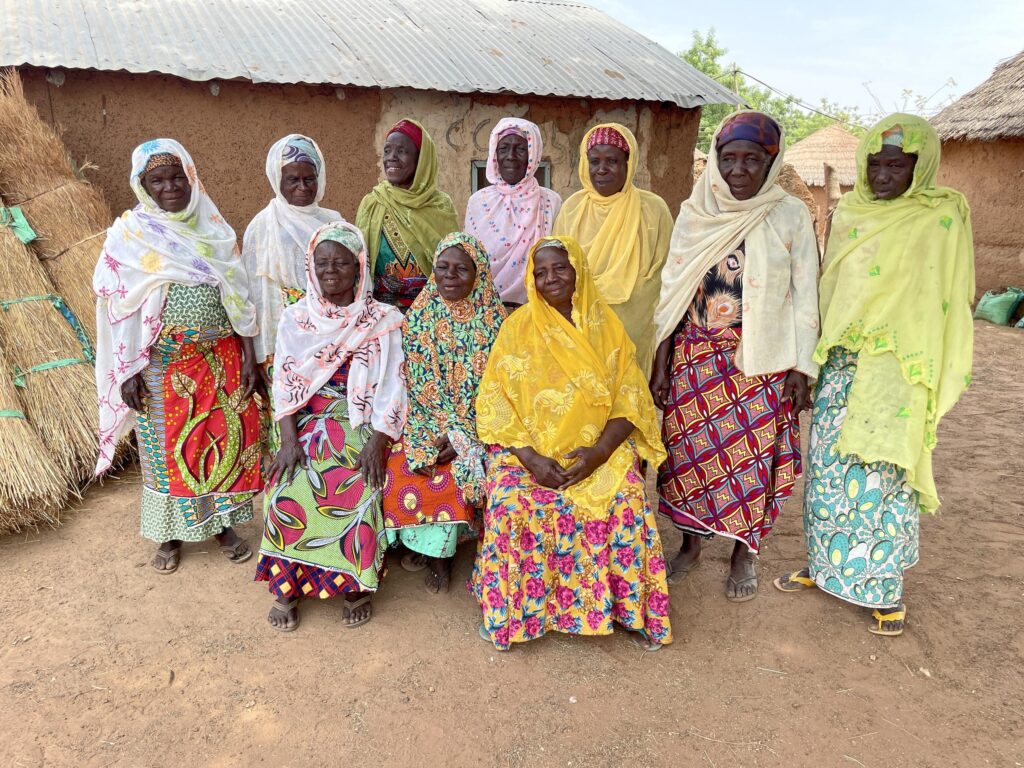
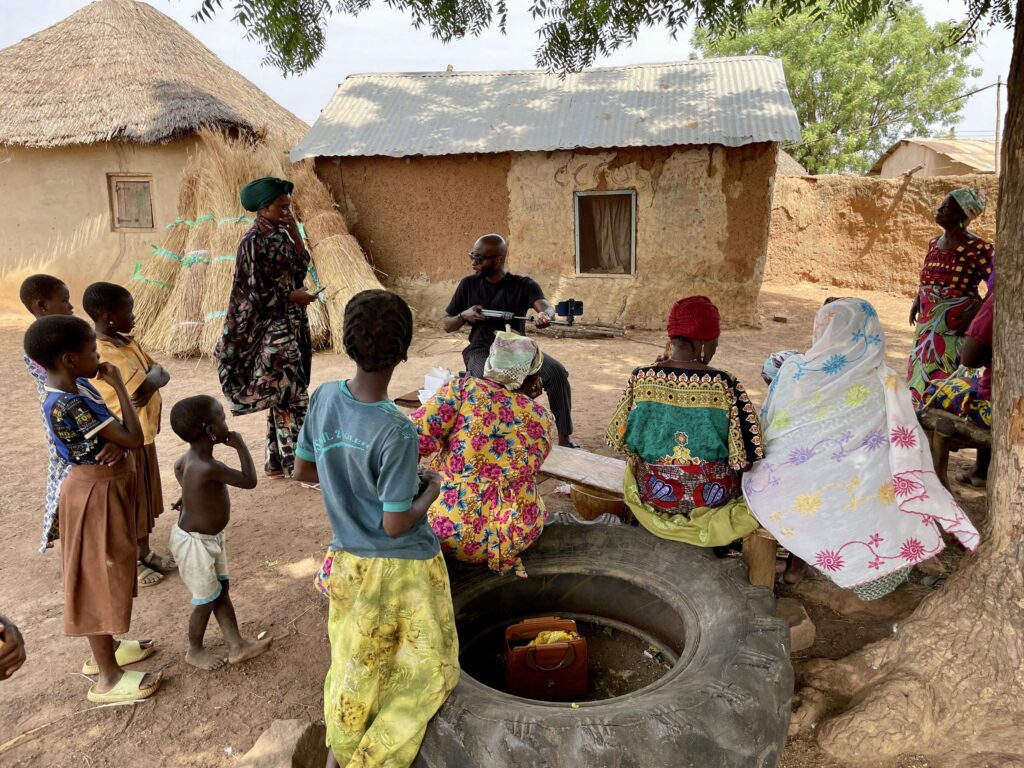
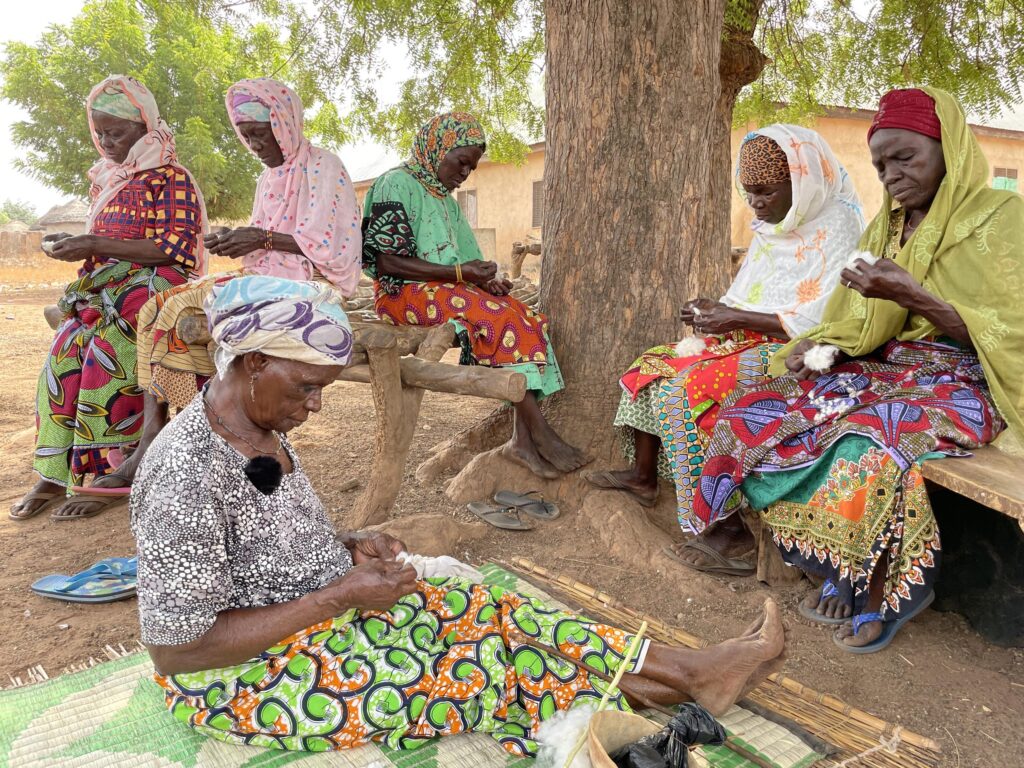
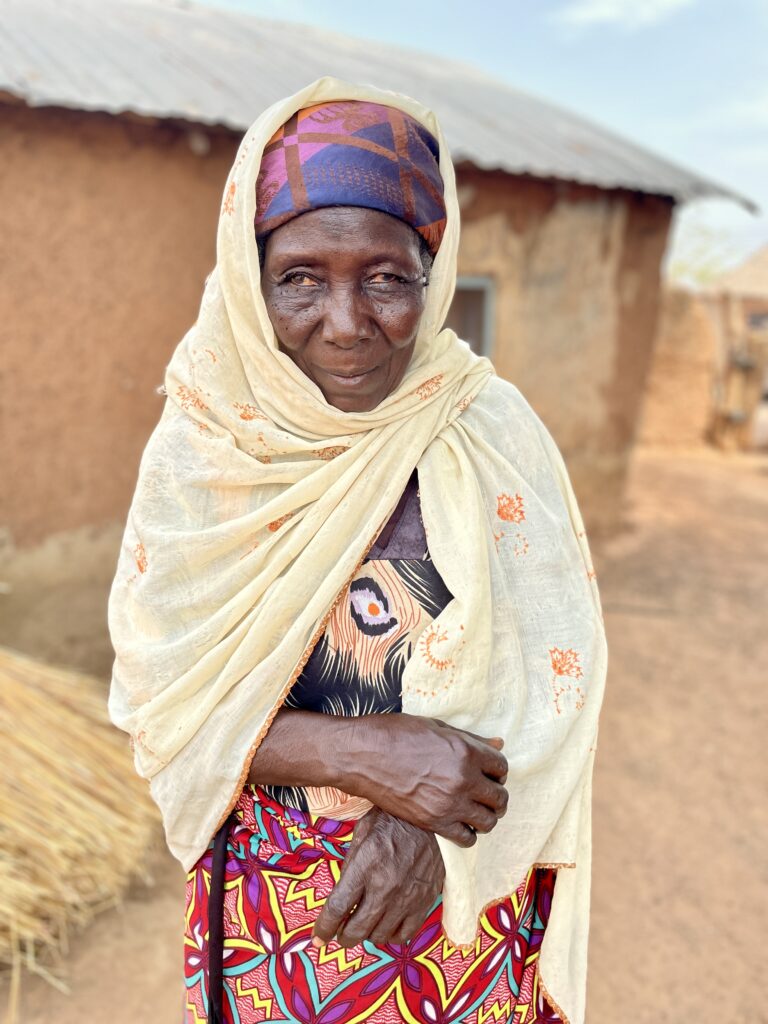
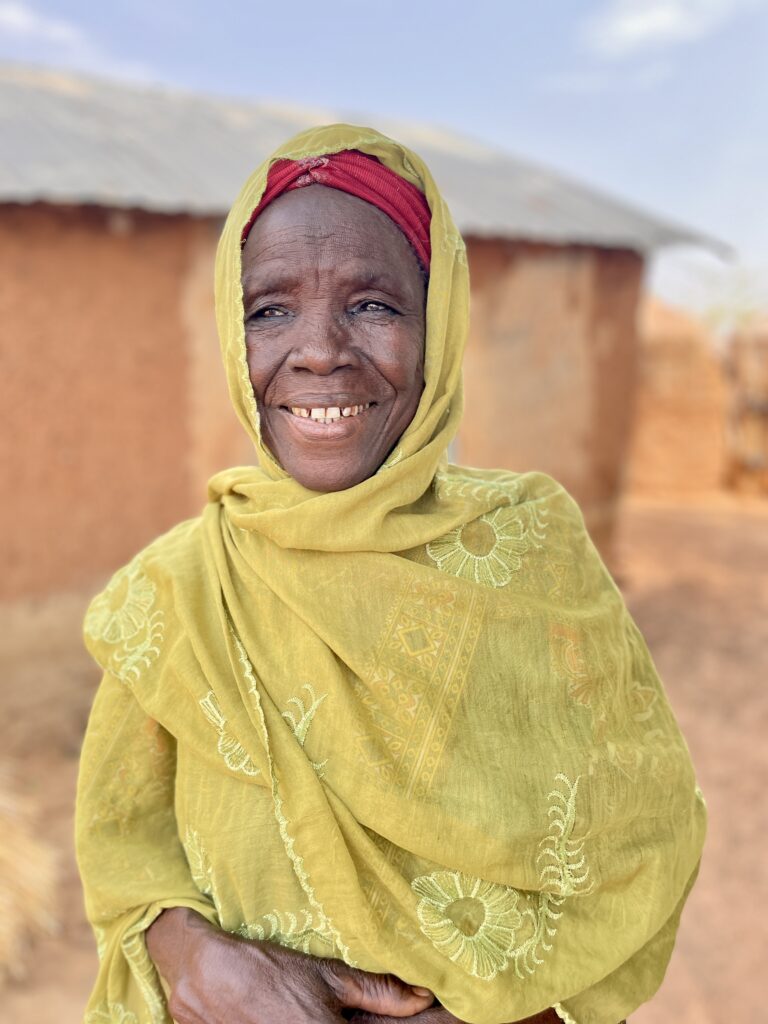
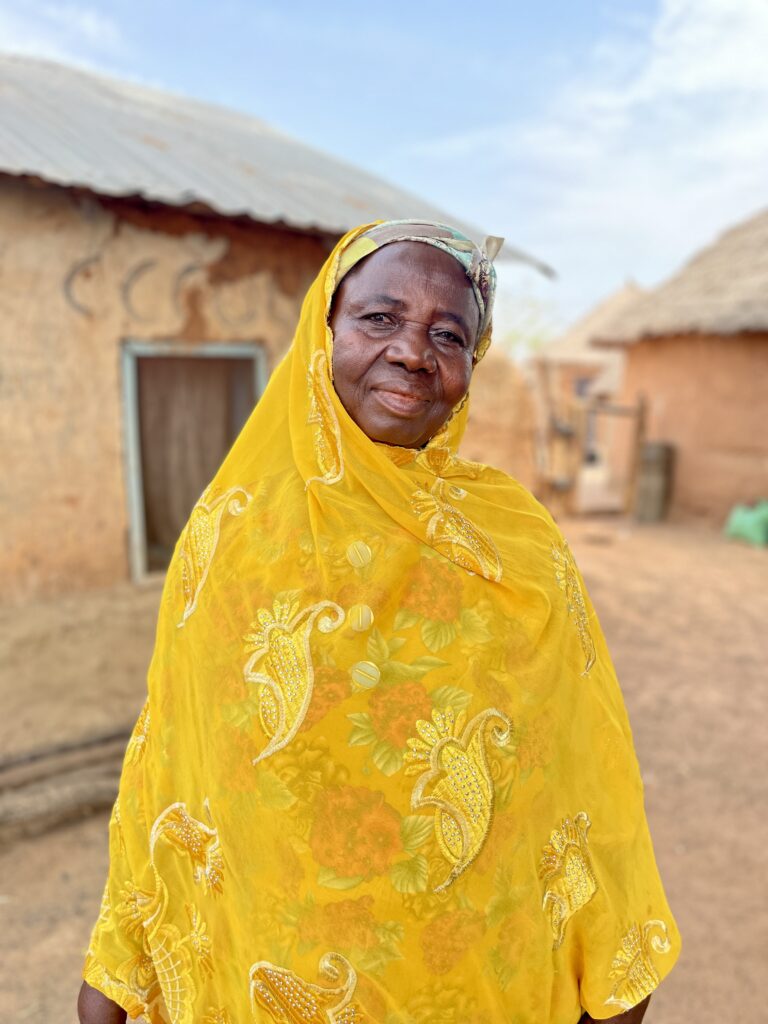
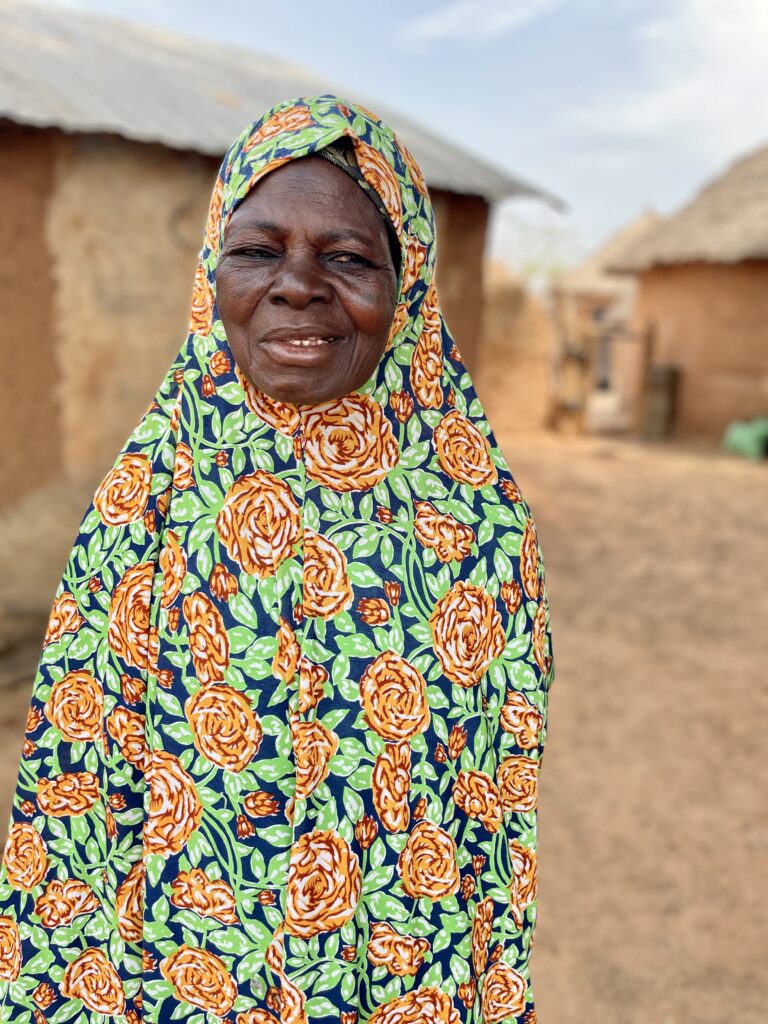
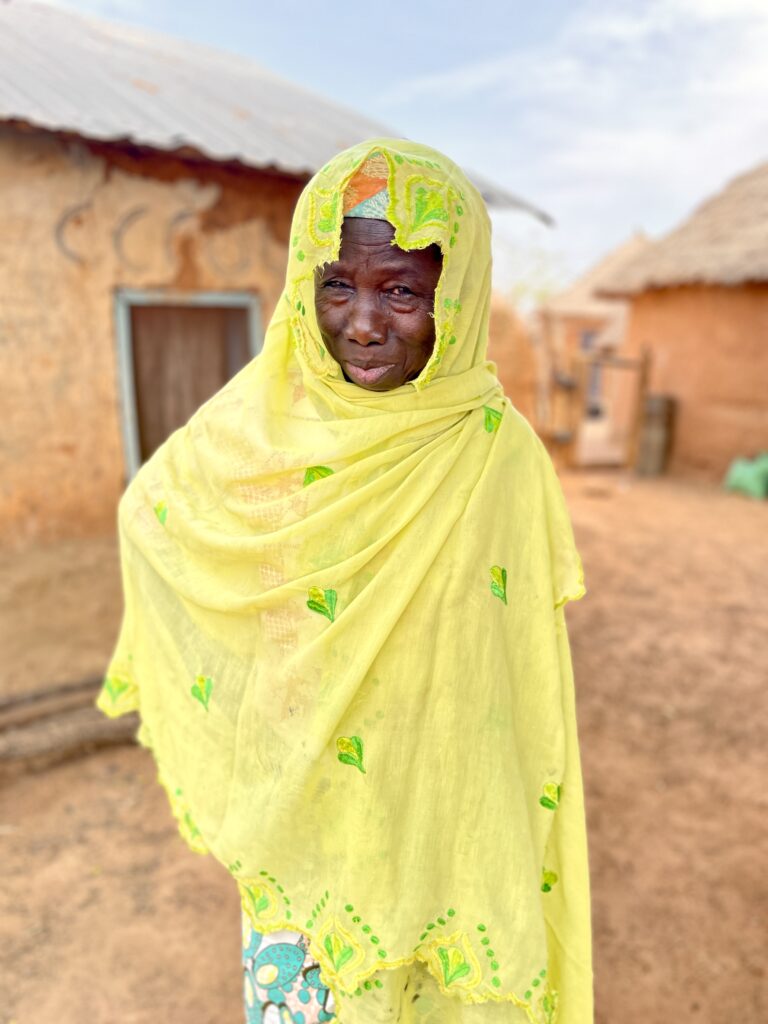
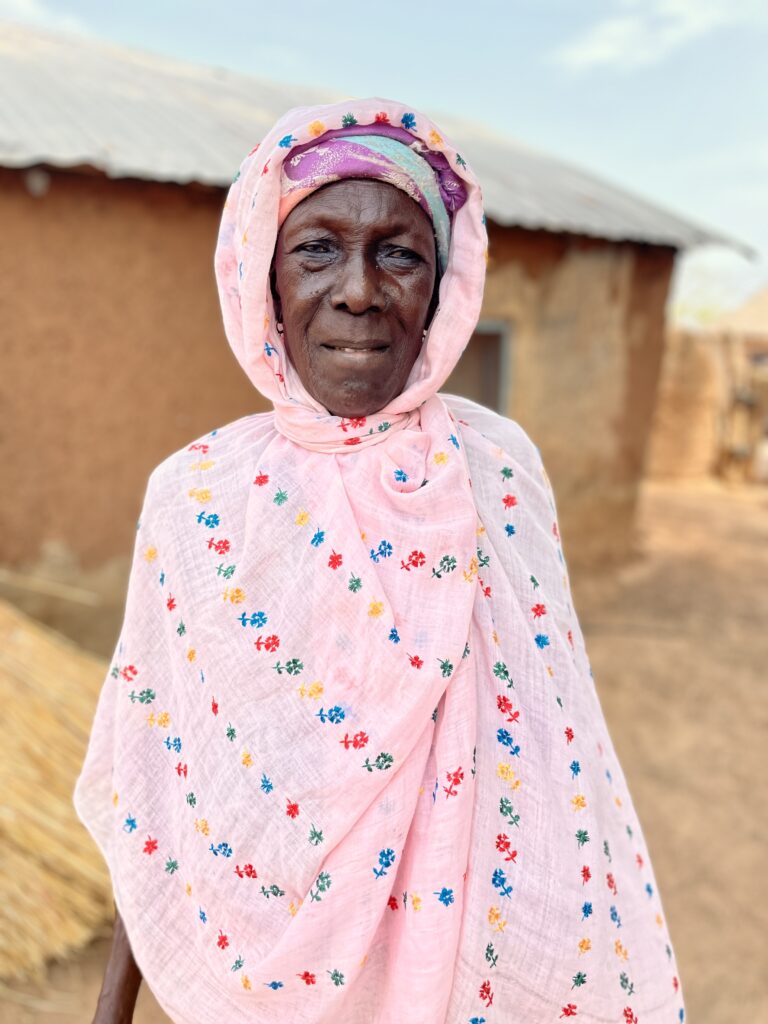
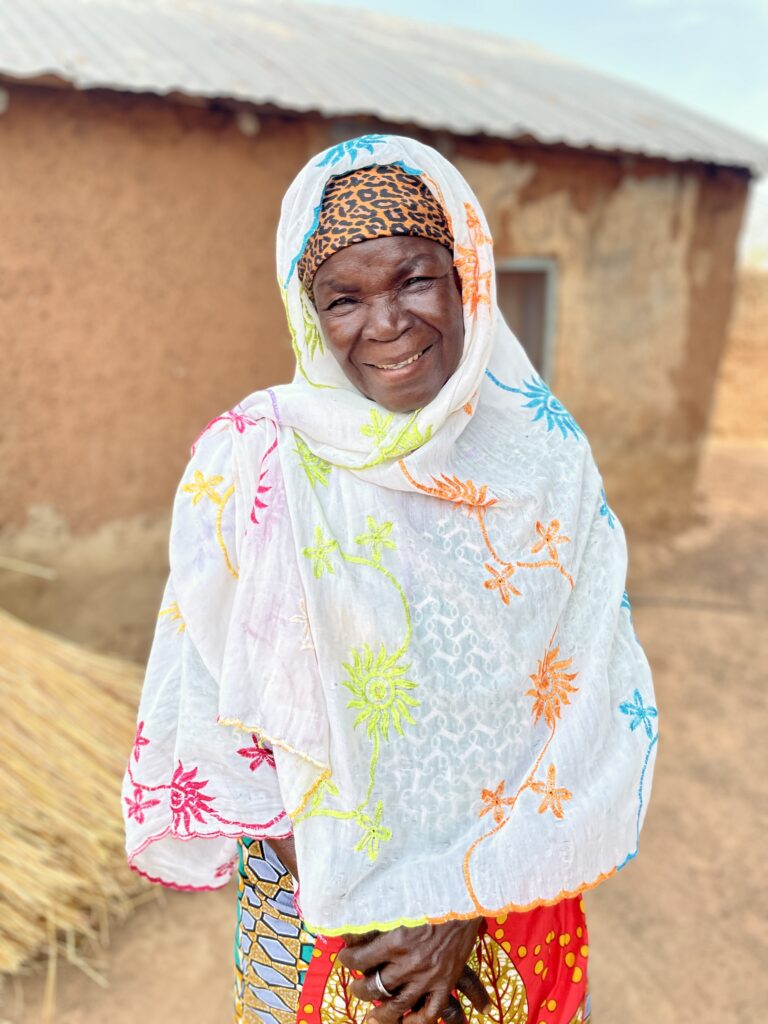
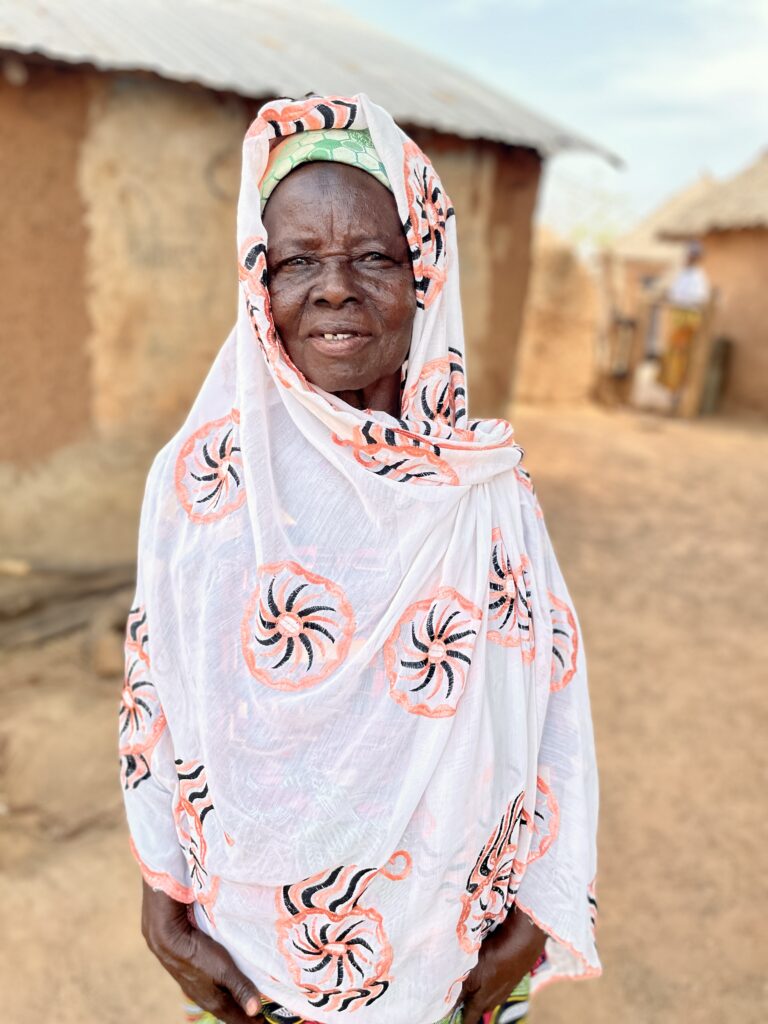
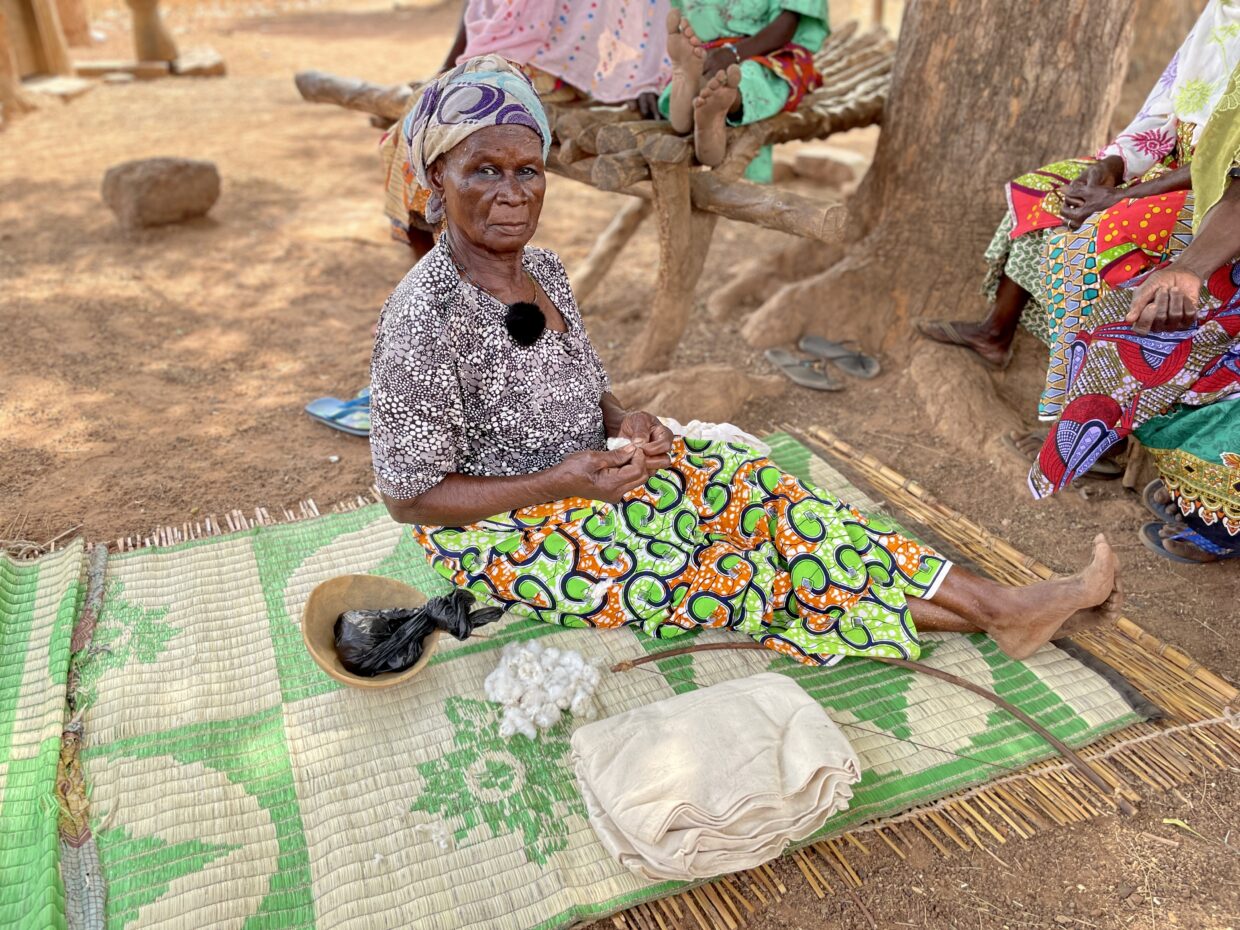
In Gumo, we met with a collective of spinners who generously hosted a demonstration of their methods.
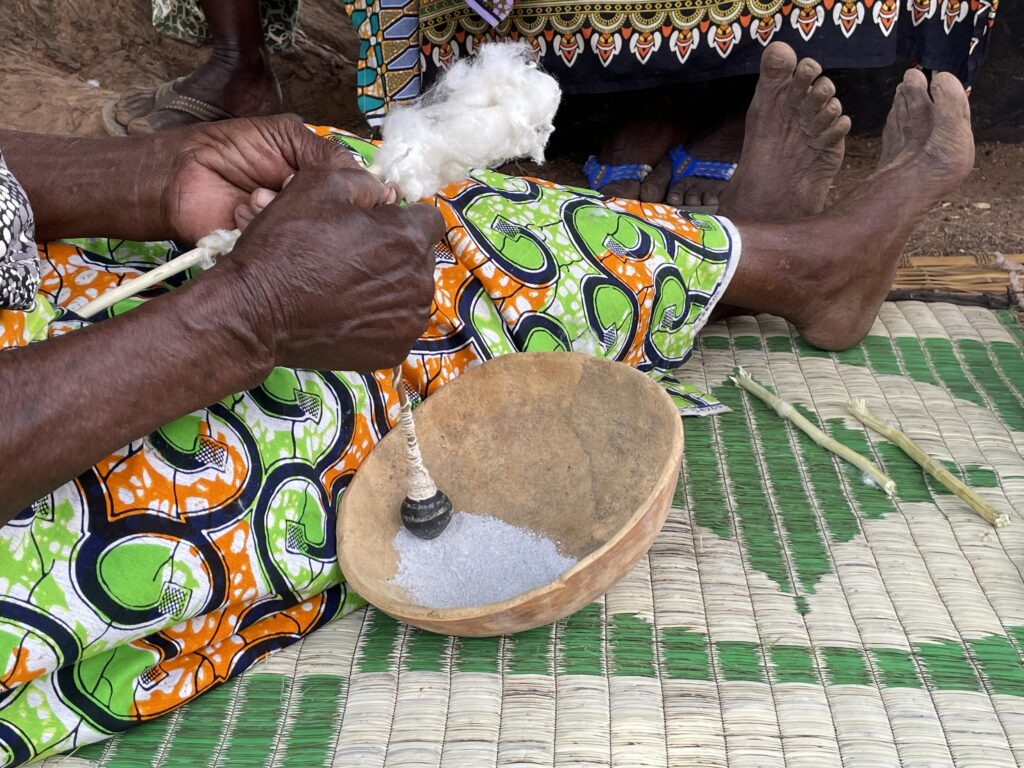
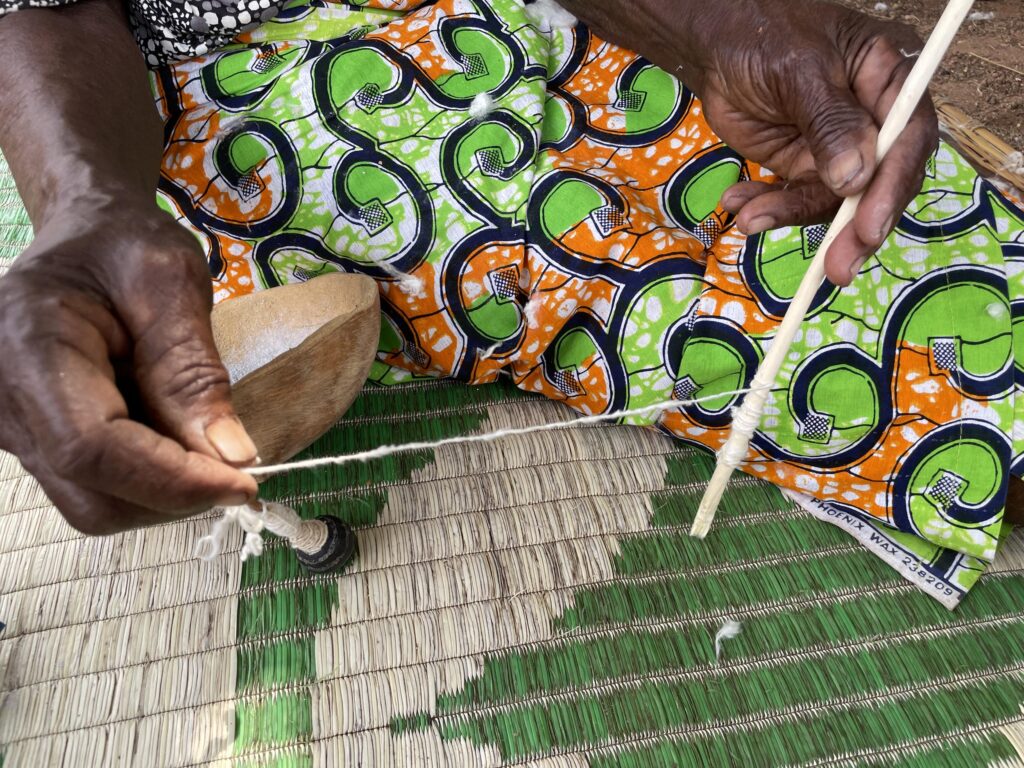
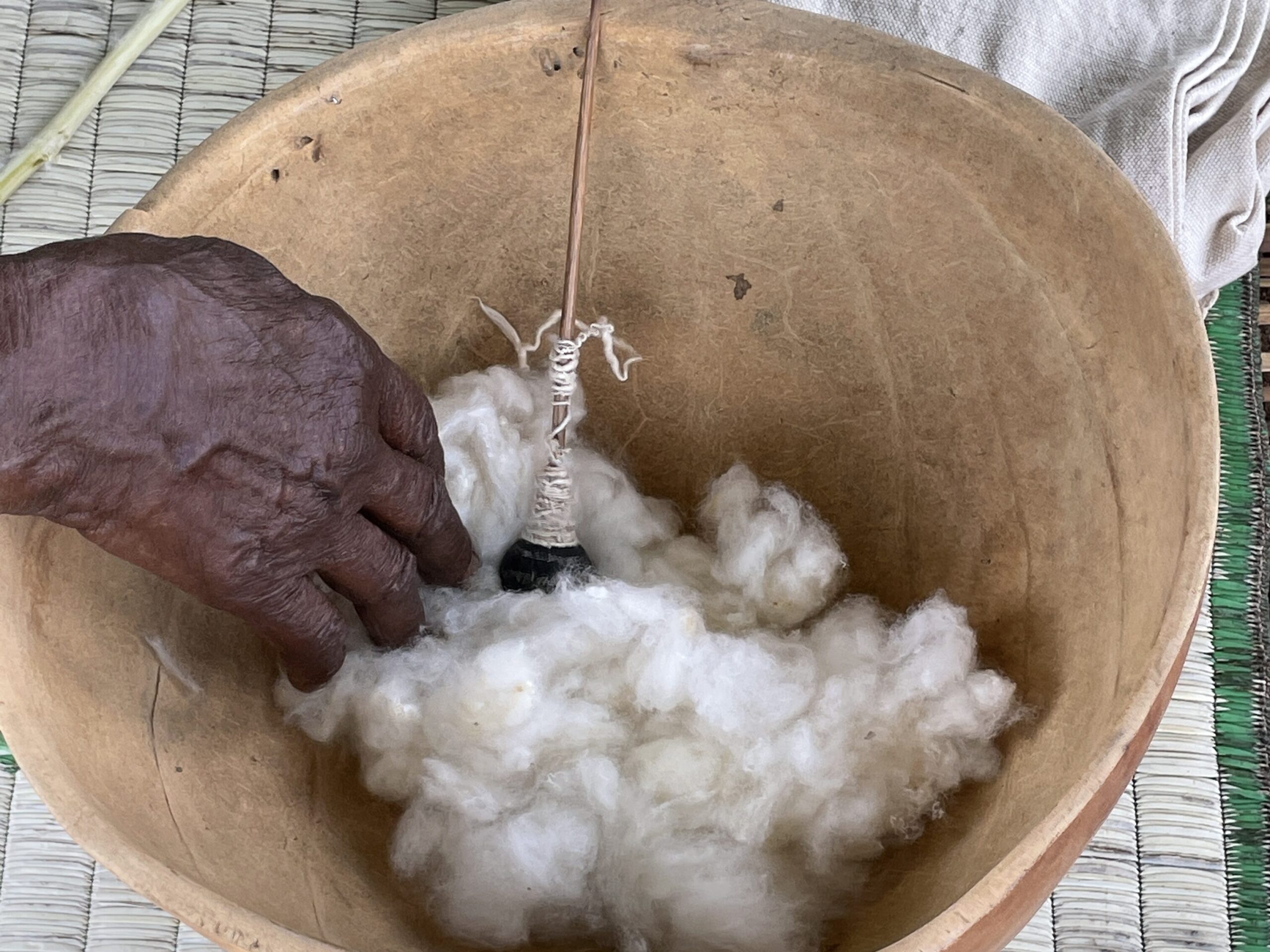
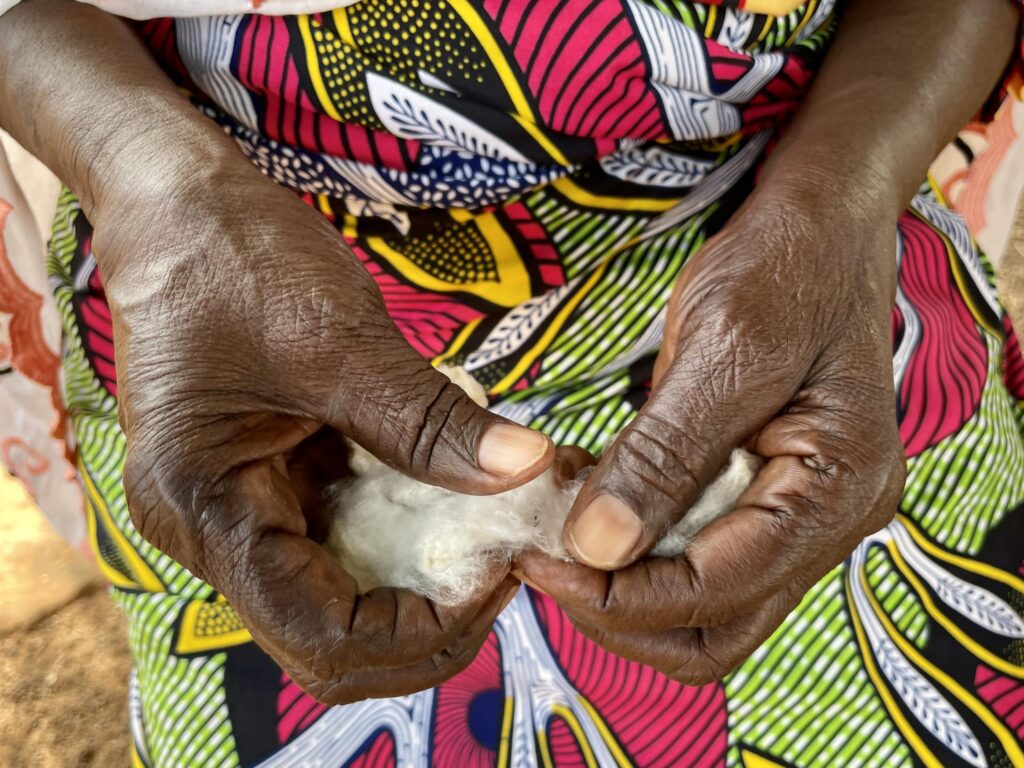
The spinners first remove the cotton seeds by hand and then pluck a bow through the cotton to fluff it up. Next, they roll the fluffy cotton onto a stick, forming a rolag, which is attached to the spindle. Then the spinning starts. The spindle whorl is made of clay and has a good weight to maintain the spindle’s speed of rotation. The spindle remains in a small calabash bowl or plate as it spins.
Observing multiple women work side by side underscored the communal aspect of spinning and how such hands-on gatherings once served as a vehicle for storytelling, knowledge-sharing, and social cohesion.
This encounter reminded us that cotton spinning is more than a craft—it is a living cultural practice that thrives on collaboration and collective memory.