Karin Altmann
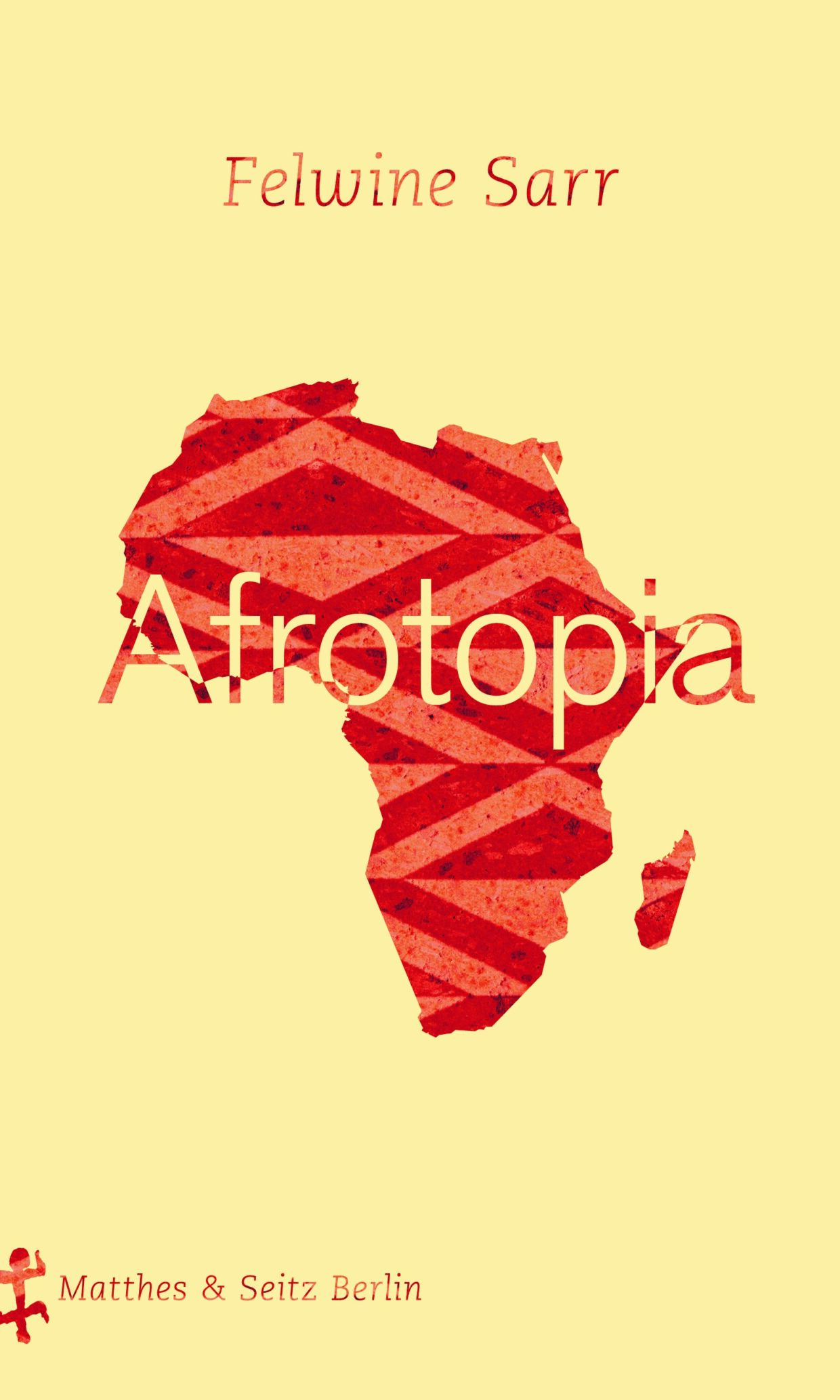
AFROTOPIA is a philosophical essay that challenges dominant ideas about development and proposes a new vision for Africa’s future based on its own histories, cultures, and values. Rather than offering a conventional economic or political program, Sarr presents what he calls an “active utopia”, a forward-looking project rooted in Africa’s internal potential and imagination.
At the heart of the book is a critique of Western models of development. Sarr argues that the idea of “development” is not universal but historically specific to Western societies, and its global application has often been imposed on Africa without regard for local realities. Indicators such as GDP (Gross Domestic Product) or industrial growth, he suggests, fail to capture what truly matters in human life, such as well-being, social harmony, and cultural meaning.
Instead of trying to “catch up” with the West, Sarr insists that Africa must define its own path. This requires what he calls intellectual sovereignty, the ability to think independently and produce knowledge grounded in African experiences. He critiques the tendency toward imitation, where African societies replicate foreign institutions and models, and argues that this perpetuates dependency and undermines creativity.
“Africa has no one to keep pace with. It no longer needs to run on paths dictated to it, but to walk swiftly on the path it has chosen”.
“Afrika muss gegenüber niemanden aufholen. Es hat nicht mehr auf jenen Pfaden zu laufen, die man ihm zuweist, sondern sollte zügig den Weg gehen, den es selbst gewählt hat.” p. 152
A key dimension of this renewal is cultural. Sarr emphasizes that economic systems are not neutral but shaped by cultural values. He draws on African philosophical concepts such as ubuntu (communal humanity), teranga (hospitality), and imihigo (collective commitment) to illustrate alternative ways of organizing society and valuing human life. These concepts suggest a model of development centred on community, dignity, and balance rather than accumulation and competition.
Sarr also highlights the psychological effects of colonialism, including a persistent sense of inferiority and alienation. For Africa to move forward, he argues, it must undergo a process of “healing” and self-redefinition. This involves reclaiming its history, restoring confidence, and developing its own narratives about the future. Influenced by thinkers like Frantz Fanon, Sarr sees this mental decolonization as essential to any meaningful transformation.
Importantly, AFROTOPIA does not advocate isolation. Sarr does not reject globalization outright but calls for selective engagement, adopting what is useful while rejecting what is harmful. Africa should contribute to global civilization on its own terms, offering alternative perspectives on ecology, community, and human flourishing.
The book also addresses practical concerns such as urbanization, governance, and environmental sustainability. Sarr envisions African cities as spaces of creativity and possibility, and he encourages innovative institutional arrangements that prioritize long-term well-being over short-term political gains.
AFROTOPIA is a call to imagination. Sarr invites intellectuals, artists, and youth to rethink their future beyond inherited frameworks. His vision is of a continent that does not measure itself against others but instead cultivates its own “Afrotopos”, a space where Africa becomes fully present to itself and contributes meaningfully to humanity as a whole.
Although Felwine Sarr doesn’t focus on traditional textile practices explicitly, these crafts can be read as metaphors of the ideas he develops. Sarr argues that Africa should build its future from within, rather than copying external models. Traditional textile crafts like hand weaving embody exactly this principle. They rely on local materials, inherited techniques, and region-specific aesthetics. In this sense, weaving represents knowledge rooted in place, aligning with Sarr’s call for intellectual and cultural sovereignty. Each textile tradition develops its own logic, just as Sarr envisions African societies developing their own paths.
In Ghana, handspinning and weaving are not just crafts, they are embodied philosophies. They show how Sarr’s ideas about autonomy, cultural grounding, and alternative development already exist in practice, woven into everyday life.
The loom can be seen as a metaphor for society. Weaving brings together many threads into a coherent whole. This mirrors Sarr’s vision of a balanced society where economic, cultural, spiritual, and social dimensions are interwoven rather than separated. Western development models often isolate economic growth as the main “thread,” but Sarr argues for a richer fabric of life. A woven textile, where no single thread dominates but all contribute to the pattern, is a useful way to visualize this holistic approach.
Spinning and weaving are slow, rhythmic processes that require patience and skill. This contrasts with the acceleration and productivity-driven logic of global capitalism that Sarr critiques. Traditional crafts value time as quality, not just efficiency. This reflects his idea that well-being and meaning cannot be reduced to output or speed.
Textile traditions often carry symbolic patterns, stories, and identities across generations. Techniques are passed down through apprenticeship and community practice. This connects strongly with Sarr’s emphasis on reclaiming history and restoring cultural confidence. Weaving becomes a form of “living archive,” preserving knowledge that colonial systems often marginalized or devalued.
Finally, traditional crafts suggest different economic logics like small-scale production, artisanal value, and local markets rather than mass industrialization. This reflects Sarr’s interest in plural economic systems that prioritize human dignity and ecological balance over pure profit. Handspinning, though vanishing today due to industrial yarn, represents a self-contained production cycle rooted in local resources. This reflects Sarr’s critique of dependency: instead of relying on imported materials or global supply chains, traditional textile production demonstrates a degree of economic autonomy and resilience.
Sarr, Felwine (2019). Afrotopia. Berlin: MSB Matthes & Seitz Berlin.