KNOWLEDGE TRANSFER
Karin Altmann and Anita Hosseini
As part of the theoretical studies within the arts-based research project Spinning Stories – Living Archives, we are gathering opinions of experts from related research fields to obtain valuable contributions and inspirations for the project.
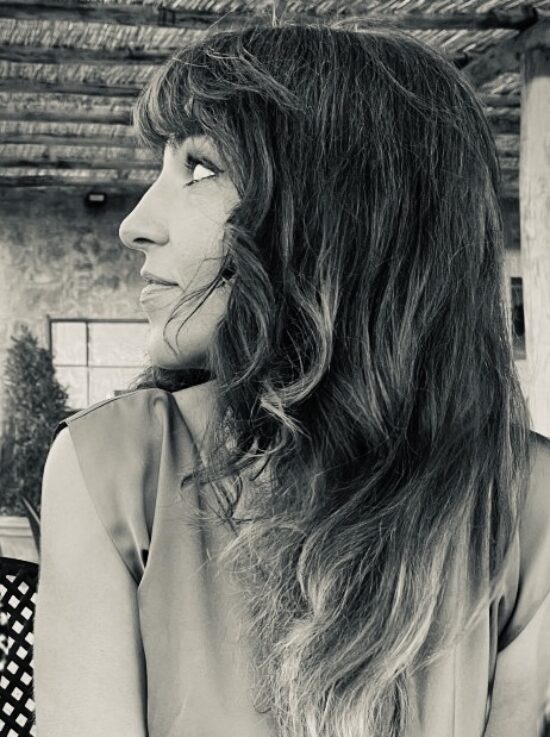
Today we are interviewing Dr. phil. Sen.Sc. Anita Hosseini, an Austrian based scientist and Senior Scientist at the Department of Art History at the Angewandte as part of our “reach-outs.”
K.A.: How do you define archives and counterarchives within contemporary art and research practices?
A.H.: With what has been described as the “archival impulse”, the archive has increasingly become both a subject and a method within artistic and curatorial practices. In contemporary art, the engagement with archives allows artists and researchers to test and destabilize conventions of knowledge production and historiography. Through a critical lens attentive to power structures, archives can be understood not merely as repositories of preservation, but as political sites that regulate visibility and invisibility — determining which actors, narratives, and actions are recorded, legitimized, or excluded.
The development of artistic and curatorial counterarchives — as well as their institutional embedding and medial expansion — can challenge and unsettle established epistemic systems and historical narratives. Counterarchives do not simply add missing voices; rather, they question the very frameworks, classifications, and regimes of evidence upon which archives are built. In doing so, they create space for marginalized perspectives and alternative temporalities, often foregrounding embodied, affective, and non-linear forms of knowledge that resist dominant archival logics.
In contemporary research practices, this shift also implies a methodological transformation: archives and counterarchives are no longer treated as neutral sources but as contested terrains. They become sites of negotiation, intervention, and re-writing, where historical authority is redistributed and epistemic hierarchies are critically reconfigured.
K.A.: In your work, what distinguishes a counterarchive from simply an “alternative” or “informal” archive?
A.H.: In my work, a counterarchive is not simply an “alternative” or “informal” archive. The distinction lies less in its institutional status and more in its epistemological and medial intervention. Counterarchives expand the archive beyond its conventional formats and materials. They are not limited to the collection and arrangement of images and written documents; rather, they question and reconfigure the very media and frameworks through which archival knowledge is constituted.
Counterarchives incorporate forms of knowledge that have historically been excluded from historiography as a predominantly written medium. These may include oral narratives, artistic practices, applied or embodied knowledge, performative acts, sound, and the body itself as carriers, sites, and practices of memory. In doing so, they foreground media and epistemologies that resist the classificatory and documentary logic of traditional archives. What distinguishes a counterarchive, therefore, is not merely that it preserves “other” content, but that it challenges the conditions of archival authority: its regimes of evidence, its hierarchies of legitimacy, and its temporal structures. Rather than supplementing the archive, the counterarchive intervenes in it. It exposes the archive’s exclusions and proposes alternative modes of remembering, recording, and transmitting knowledge — often through experimental, artistic, and process-based formats.
In this sense, the counterarchive is not only additive but transformative: it shifts the archive from a static repository of the past to a dynamic, critical practice of re-framing history and redistributing epistemic power.
K.A.: What ethical responsibilities arise when artists translate living practices and community-based knowledge into datasets or systems?
A.H.: When counterarchives are understood as political and activist instruments that seek to challenge hegemonic structures, they must themselves operate according to principles of inclusion, participation, and accountability. Artists who translate living practices and community-based knowledge into datasets or systems carry significant ethical responsibilities.
The transformation of embodied, relational knowledge into data involves processes of selection, abstraction, and formalization that can risk simplification, decontextualization, or even appropriation. Ethical practice therefore requires collaborative methodologies, transparency, and shared decision-making, ensuring that communities are not merely represented but actively involved.
At the same time, questions of consent, data ownership, protection, and long-term access must be carefully addressed. If counterarchives aim to unsettle dominant systems of visibility and power, they must also model alternative structures grounded in care, reflexivity, and shared authority.
K.A.: Could hand spinning itself be understood as an archival practice? If so, how?
A.H.: Yes, hand spinning can be understood both as an archival practice and as a practice that itself requires archiving. As a form of embodied knowledge, it preserves and transmits techniques, gestures, rhythms, and material sensitivities across generations. The knowledge embedded in craft is not only technical but also social and cultural: it carries histories of labour, gendered practices, local economies, and aesthetic traditions.
At the same time, hand spinning functions as a living archive of forms, textures, and material experimentation. It stores knowledge not in documents, but in bodies, movements, and materials. Understanding it as archival shifts attention from static repositories to processual, performative modes of remembering — where making itself becomes a mode of preservation and transformation.
K.A.: How do institutions like museums or universities engage with counterarchival practices today?
A.H.: It is always challenging to answer this question in general terms. While institutions such as museums and universities increasingly strive to engage with decolonial and intersectional perspectives, they remain shaped by the structural conditions that constitute them. As Sara Ahmed has argued, institutions often function as “white institutions,” meaning that their infrastructures, norms, and knowledge conventions continue to reproduce specific hierarchies of power and legitimacy.
As a result, counterarchival practices within institutional frameworks are frequently embedded within the very structures they seek to challenge. Meaningful engagement therefore requires institutions not only to incorporate counterarchives as content, but to critically examine their own institutional conditions, histories, and epistemic frameworks. When this reflexive process is taken seriously, counterarchival practices can open spaces for institutional self-critique. They can encourage museums and universities to address their own role in shaping dominant archives and historical narratives, while fostering alternative modes of knowledge production, participation, and representation. In this sense, counterarchives can function both as tools of critique and as catalysts for institutional transformation.